 Jörg Olbing
 AI Workforce in Real Estate: The Complete Guide
I spent nearly 15 years building a real estate brokerage in Germany. I know exactly what it costs to run a lead generation operation. I know what a good lead scout earns, what a marketing coordinator charges, what it takes to keep a five-person team producing consistently. I also know that most brokers - especially solo operators and small teams - cannot afford any of it.
That gap between what brokers need and what they can afford is the single biggest constraint on growth in this industry. And it is the gap that AI workforces are closing right now.
What is an AI workforce - and why it is not another software subscription
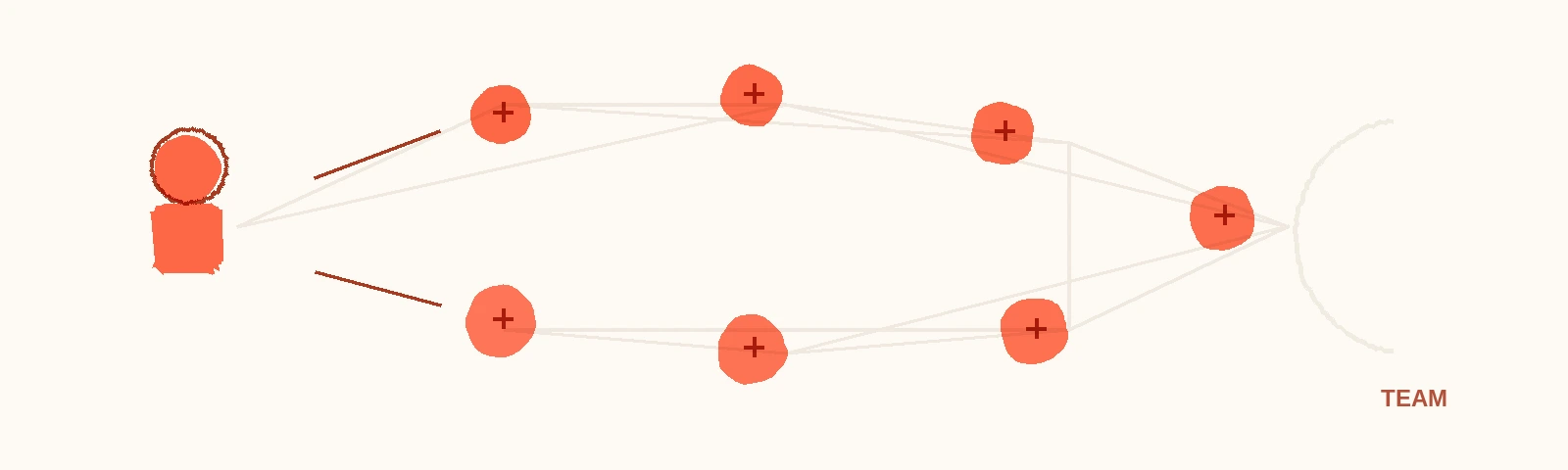
An AI workforce is a team of AI specialists that you hire to do specific jobs in your brokerage. Not a tool you log into. Not a feature set behind a paywall. A team - with roles, responsibilities, and outputs - that works alongside you the same way a human team would, except it costs a fraction of the price and never takes a sick day.
The distinction matters because it changes how you think about the technology. Software is something you operate. A workforce is something that operates for you. You do not open an AI workforce the way you open a CRM. You check in with it the way you check in with a team member. “What did you find today?” “Who should I call first?” “Is that seller still active?”
This is not marketing language. It is an architectural difference. Traditional PropTech gives you tools and expects you to do the work. An AI workforce does the work and delivers the results. Your job shifts from operating software to managing outcomes.
The workforce model vs the tool model - hiring AI teammates vs buying features
Every broker tool you have used in the past 20 years follows the same pattern: you pay a monthly fee, you get access to features, you do the work inside the software. The tool model. It scales with your effort - if you put more hours in, you get more out.
The workforce model inverts this. You hire AI teammates. They work whether you are at your desk or at a listing appointment. Their output does not depend on your input. A lead scout finds leads while you sleep. A marketing specialist runs campaigns while you meet clients. A valuation expert qualifies sellers while you negotiate contracts.
| Tool Model (CRM) | Workforce Model (AI Team) | |
|---|---|---|
| You pay for | Access to features | Work being done |
| Output depends on | Your time in the software | The AI team’s capabilities |
| Scales with | Your hours | The team’s hours (24/7) |
| Primary interface | Dashboard you operate | Conversation you manage |
| When you stop working | Nothing happens | Team keeps producing |
| Data entry | You enter everything | Team generates the data |
The practical difference is enormous. A broker using a CRM who goes on vacation for two weeks comes back to an empty pipeline. A broker with an AI workforce comes back to two weeks of qualified leads, market analyses, and campaign results waiting for review.
The types of AI experts - lead generation, valuation, marketing, coordination
A complete AI workforce for real estate covers four core functions. These are not random - they map directly to the roles you would fill if you were building a human team.
Lead Generation - The scout. Finds homeowners who are likely to sell by monitoring public records, ownership patterns, and life events. Identifies For-Sale-By-Owner listings. Delivers qualified leads with context: why this person might sell, what their property is worth, and when to contact them.
Valuation - The qualifier. Engages property owners in genuine valuation conversations rather than pushing them through online forms. Assesses motivation, timeline, and expectations. Filters tire-kickers from serious sellers before the broker invests a single hour.
Marketing - The campaigns specialist. Creates and manages targeted advertising for seller lead generation. Handles creative production, audience targeting, budget optimization, and performance tracking. Replaces the EUR 500 to 2,000 per month agency retainer that most brokers waste on mediocre campaigns.
Coordination - The team lead. Manages the flow between all specialists. Delivers consolidated updates. Ensures nothing falls through the cracks. This is the role that ties everything together - one point of contact instead of four separate tools.
How to hire your first AI teammate - implementation without the learning curve
Here is the part where most technology companies lose brokers: the setup. I have watched dozens of PropTech products fail not because they were bad technology, but because they required 20 hours of configuration, three training sessions, and a dedicated IT person to maintain.
An AI workforce should work like hiring a new team member. You tell them what you need. They start working. You review results and give feedback. The learning curve belongs to them, not to you.
Step 1: Start with one function. Lead generation is the highest-impact starting point for most brokers. It directly feeds your pipeline with opportunities you would never find manually. Do not try to deploy a complete AI workforce on day one.
Step 2: Define your territory. Your AI lead scout needs to know where you work - postal codes, neighborhoods, property types. This takes five minutes, not five hours.
Step 3: Let it run for a week. Do not judge results on day one. A lead scout needs time to scan, qualify, and filter. By day seven, you should see a clear pattern of qualified leads arriving without any effort on your part.
Step 4: Add functions as needed. Once lead generation is producing consistently, add marketing. Then valuation. Each new teammate multiplies the others - leads found by the scout get qualified by the valuation expert and supported by the marketing specialist.
The entire setup should take less time than configuring a new CRM. If it doesn’t, something is wrong with the product, not with you.
The math - a human lead gen team costs EUR 145-245K per year, an AI team costs EUR 69 per month
This is the number that changed everything for me. When I was running Assetgate, my lead generation operation - a scout, a marketing coordinator, and a part-time valuation analyst - cost roughly EUR 180,000 per year including salary, benefits, office space, and tools. That was a reasonable mid-market team in Germany.
| Role | Human Cost (Annual) | AI Cost (Monthly) |
|---|---|---|
| Lead Generation Director | EUR 50,000 - 70,000 | Free (coordinator role) |
| Lead Scout | EUR 20,000 - 30,000 | EUR 49 |
| Ads / Marketing Specialist | EUR 25,000 - 35,000 | EUR 19 |
| Valuation Specialist | EUR 25,000 - 40,000 | EUR 19 |
| Total | EUR 145,000 - 245,000 | EUR 69 (full team bundle) |
That is not a typo. The annual cost of a full AI lead generation team - EUR 828 at EUR 69 per month - is less than what most brokerages spend on CRM licenses alone.
Now, is an AI team identical to a human team? No. A human lead scout brings intuition, personal relationships, and local gossip. An AI lead scout brings scale, consistency, and 24/7 availability. The practical reality for 90% of brokers - the ones who cannot afford a human team at all - is that the choice is not between human and AI. It is between AI and nothing.
What brokers actually experience - daily life with an AI workforce
I talk to brokers across Europe every week. The ones running AI workforces describe the same shift: mornings changed.
Before, morning meant opening the CRM, checking email, scanning portals, and spending 60 to 90 minutes figuring out what to do today. Now, morning means opening a chat and reading what the team found overnight. Three new leads in your area. One FSBO that listed yesterday. A seller who responded to a campaign at 11 PM. A market analysis prepared for your afternoon appointment.
The broker’s first action of the day is no longer administrative. It is strategic. “Which of these leads should I call first?” That is a closing question, not a data entry question. That is the 5-minute response window that separates winners from everyone else.
One pattern I hear repeatedly: brokers who start with AI lead generation end up reducing or eliminating their portal subscriptions within three months. When leads arrive proactively, the need to manually hunt on listing portals drops dramatically. That alone often covers the cost of the AI team several times over.
Common concerns - trust, data privacy, accuracy, and broker control
Every broker I talk to raises the same four concerns. All of them are legitimate.
“Can I trust the leads?” You should verify the first batch yourself. After a week, you will have a clear sense of quality. Good AI lead generation should show you why each lead was flagged - ownership duration, life events, market signals. If it just dumps names without context, it is not qualified lead generation. It is a list.
“What about data privacy?” In the EU, GDPR compliance is non-negotiable. Any AI workforce operating in European markets must process data under legitimate interest or explicit consent, store data in EU-based infrastructure, and provide full transparency on what data is collected and how. Ask your provider directly. If they cannot answer clearly, walk away.
“How accurate are AI-generated valuations and analyses?” AI pulls from public databases, recent transactions, and market comparables. Accuracy depends on data quality in your specific market. In established markets with strong transaction records, accuracy is high. In thin markets with few comparables, human judgment still matters. The best model is AI-generated analysis reviewed by the broker before it reaches the client.
“Do I lose control?” No. A well-designed AI workforce operates like a team that reports to you. Nothing goes to a client without your approval. Every lead, every message, every valuation is presented to you for review. You are the manager, not the operator. That distinction - built for closers, not supervisors - is the entire point.
The future of real estate work - why AI teammates are not optional after 2026
The brokers who adopt AI workforces in 2026 will not just be more efficient. They will be operating in a different competitive category entirely. While traditional brokers spend their mornings on admin, AI-equipped brokers will spend their mornings on conversations. The pipeline gap will compound monthly.
This is not prediction. This is pattern recognition from 20 years in the industry. Every technology wave - online portals, mobile CRM, social media marketing - created a temporary advantage for early adopters that became table stakes within three years. AI workforces will follow the same curve, faster.
The question is not whether you will work with AI teammates. The question is whether you hire them now, while the advantage is still an advantage, or later, when it is merely survival.
I bet my own exit money on this thesis. Not because I am a technology optimist. Because I spent two decades watching what happens when you give brokers their time back. They close more deals. Every single time.