 VALO
VALO Valuation Campaigns That Convert Ad Clicks to Listings
A valuation campaign that generates 200 clicks and 40 form submissions but produces only one signed listing is not an advertising problem. It is a conversion architecture problem. The ads work - people click, people submit. The failure happens in the seconds and hours after submission, where most brokers have no structured process at all. Fix the handoff between click and conversation, and the same ad spend produces five to eight listings instead of one.
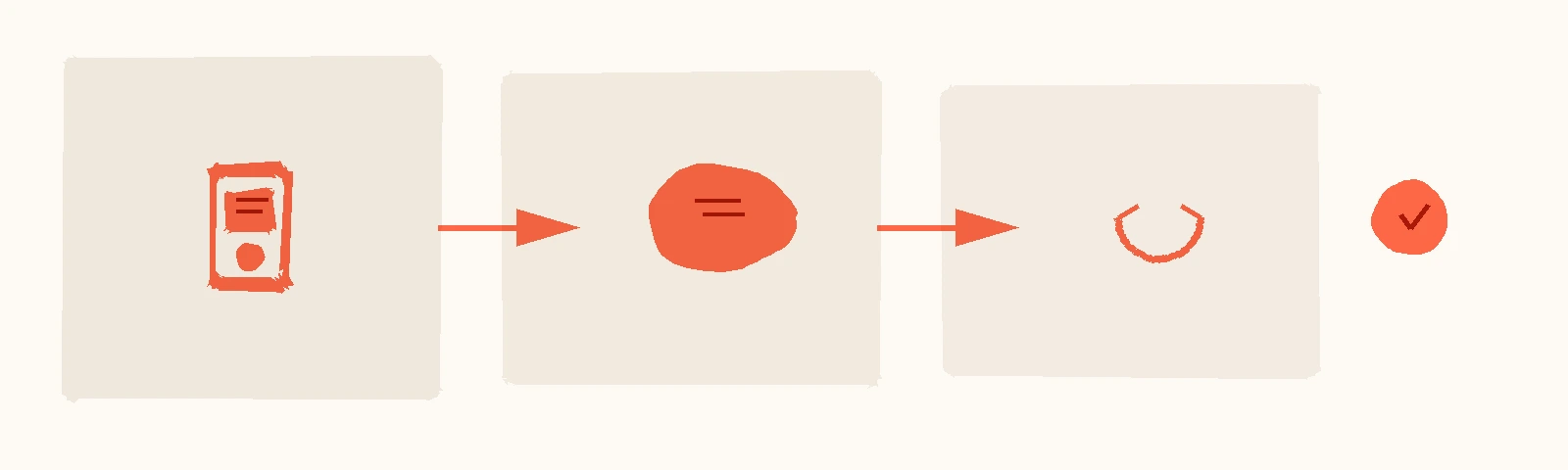
The valuation campaign funnel - from ad impression to signed listing
A complete valuation campaign funnel has six stages: ad impression, click, valuation request, conversation, listing appointment, and signed mandate. Most brokers measure the first three and ignore the last three, which is why they cannot diagnose why campaigns that “generate leads” fail to generate revenue.
Here is what the math looks like at each stage for a typical campaign:
| Stage | Volume | Conversion to Next |
|---|---|---|
| Ad impressions | 10,000 | 2% CTR |
| Clicks | 200 | 20% submit |
| Valuation requests | 40 | 25% reach conversation |
| Conversations | 10 | 50% attend appointment |
| Listing appointments | 5 | 40% sign mandate |
| Signed listings | 2 | - |
Two listings from 10,000 impressions. The headline metric - 40 leads - looks promising. The reality - 2 listings - reveals where the funnel breaks.
The largest single drop is between valuation request and conversation: 40 submissions become 10 conversations. Seventy-five percent of people who raised their hand are never spoken to in a meaningful way. This is not because they were unqualified. It is because nobody talked to them fast enough, or nobody talked to them at all.
The second critical drop is between conversation and appointment. Half of the owners who have a conversation never meet the broker in person. Usually because the conversation was too shallow to build enough trust for an in-person commitment, or because the follow-up after the conversation was nonexistent.
Every percentage point recovered at these two stages multiplies the output of the entire campaign. Speed to Lead: Why Five Minutes Decide Everything covers the response-time data in detail.
Why most valuation campaigns leak leads between click and conversation
The primary leak in valuation campaigns is response latency: 78% of online leads go to the first responder, yet the average broker response time to a valuation form submission exceeds 4 hours. By that point, the owner has either lost momentum, submitted requests elsewhere, or decided the process is not worth the effort.
The second leak is friction. An owner clicks an ad promising a free valuation. They land on a form asking for name, email, phone, address, property type, square meters, number of rooms, year built, condition, and “any additional information.” Twelve fields. On mobile - where 70% of social media ad clicks originate - this is a 3-minute task. Drop-off rates on mobile forms with more than 5 fields exceed 60%.
The third leak is expectation mismatch. The ad promised a valuation. The form collected data. Then nothing happens for hours. The owner expected engagement. They got silence. By the time the broker calls, the emotional momentum that drove the click is gone.
Each of these leaks is structural, not random. They exist because the campaign was designed to generate submissions, not to generate conversations. The fix is designing the post-click experience as carefully as the ad itself.
A conversation-first approach replaces the static form with an immediate, interactive valuation dialogue. The owner clicks the ad and enters a conversation - not a form. Questions come one at a time, conversationally. The owner feels engaged from the first second. Response latency drops from hours to seconds. Form friction disappears. And the conversation itself qualifies the lead before the broker ever picks up the phone.
The handoff moment - what happens in the first 60 seconds after someone requests a valuation
The 60 seconds immediately following a valuation request determine whether the lead converts or evaporates. An owner who receives an immediate, personalized acknowledgment is 7 times more likely to engage in a full conversation than one who receives a generic “we’ll be in touch” autoresponder. This is the single highest-impact moment in the entire campaign funnel.
What happens in those 60 seconds should feel like the beginning of a conversation, not the end of a transaction. The owner just told you they want to know what their property is worth. The correct response is to start finding out - immediately.
A structured first-60-seconds sequence looks like this:
Second 0-5: Acknowledgment. “Thank you - let’s find out what your property is worth.”
Second 5-20: First context question. “To give you an accurate estimate, I’d like to understand a bit about your situation. How long have you lived at the property?”
Second 20-40: Property orientation. Based on their response, ask one property-specific question. “And how would you describe the overall condition - have you done any significant renovations?”
Second 40-60: Intent signal. “What made you start thinking about a valuation right now?”
In 60 seconds, you have established engagement, begun qualification, and - critically - you have the owner actively participating. They are no longer a passive form submission. They are in a conversation. The psychological shift is significant: a person mid-conversation is far less likely to abandon the interaction than a person waiting for a callback.
This is also where the quality of the valuation conversation begins to compound. The context captured in this first minute shapes every subsequent interaction - the depth of the estimate, the broker’s preparation for the listing appointment, and the follow-up messaging that keeps the owner moving forward. For more on structuring that conversation, see What Homeowners Actually Want When They Request a Valuation.
Qualifying intent during the valuation conversation - the three signals that predict a listing
Three specific signals during a valuation conversation predict with approximately 80% accuracy whether an owner will sign a listing mandate within 90 days: a stated timeline tied to a life event, engagement with comparable property data, and a direct question about the broker’s process or fees. Owners who exhibit all three convert at 5 to 8 times the rate of those who exhibit none.
Signal 1: Timeline tied to a life event. “We need to be settled before the school year starts” is fundamentally different from “just wondering what it’s worth.” A timeline anchored to an external event - job relocation, retirement, divorce settlement deadline, lease expiration - indicates that selling is not hypothetical. It is a requirement with a clock on it. When you hear this signal, the conversation should shift toward process: how long listing preparation takes, what the market timing looks like, what a realistic schedule would be.
Signal 2: Engagement with comparable data. When you mention that a similar property on the same street sold for a specific price, watch how the owner responds. An owner who asks follow-up questions - “Was that one renovated?”, “How long was it on the market?”, “Was that the asking price or the final price?” - is evaluating whether to proceed. They are doing due diligence in real time. An owner who does not engage with comparables is usually earlier in their thinking and may need more time.
Signal 3: Questions about process or fees. “How does the listing process work?”, “What commission do you charge?”, “How long does it typically take to sell in this area?” - these are buying signals. An owner asking about your fees is an owner who is mentally calculating the net proceeds of a sale. They are past the “should I sell?” question and into the “how do I sell?” question. This is the moment to propose a listing appointment.
The absence of all three signals does not mean the lead is worthless. It means the owner is earlier in their decision process. These leads belong in a nurture sequence - periodic check-ins with market updates - rather than an aggressive appointment-setting push. Knowing the difference saves brokers dozens of hours per month on premature listing pitches.
From valuation to appointment - the follow-up sequence that moves owners forward
The optimal follow-up sequence after a valuation conversation has three touchpoints over seven days: a same-day summary with the preliminary estimate, a day-three market context message with one relevant comparable, and a day-seven soft appointment proposal. This sequence converts 35% to 45% of conversation-qualified leads to listing appointments, compared to 10% to 15% for brokers who rely on a single follow-up call.
Same-day summary (within 2 hours). Send a written recap of what was discussed: the estimated value range, the comparables referenced, and the owner’s stated situation. This serves two purposes. First, it demonstrates professionalism - you listened, you documented, you delivered. Second, it gives the owner something tangible to discuss with their partner, which is often the next step in their decision process.
Day-three market context. Share one specific comparable sale that is relevant to their property. Not a generic market report - a single property with a brief note: “This 3-bedroom apartment on Schillerstrasse sold for €312,000 last month after 34 days on market. Similar size to yours, though yours has the advantage of the renovated bathroom and south-facing balcony.” Specificity builds credibility. Generic market updates get ignored.
Day-seven appointment proposal. A simple, low-pressure message: “I have put together a detailed analysis of your property based on our conversation and recent market data. Would it make sense to meet for 30 minutes so I can walk you through it in person?” The offer is concrete (30 minutes), the value is clear (a detailed analysis they have not yet seen), and the ask is modest (a meeting, not a commitment).
This three-touch sequence works because it mirrors the owner’s decision pace. Most owners are not ready to commit on day one. They need time to process, discuss, and build confidence. The sequence keeps you present without creating pressure - and it differentiates you from every broker who called once, heard “I’ll think about it,” and never followed up.
For brokers running these campaigns alongside other lead sources, the valuation pipeline should integrate with broader lead management practices. The fundamentals of response speed and structured follow-up apply equally across sources - see The 72% Problem for the broader context on where broker time goes.
Frequently asked questions
How much should a broker spend on a valuation campaign per month?
Campaign economics depend on local cost-per-click and conversion rates, but a useful benchmark: in most European metro markets, a well-optimized valuation campaign requires €500 to €1,500 per month in ad spend to generate 20 to 40 valuation conversations. At a 10% conversation-to-listing rate, that produces 2 to 4 listings per month. Given that the average listing commission in those markets ranges from €5,000 to €15,000, the return on ad spend is substantial - provided the post-click conversion architecture is in place. Without it, the same spend produces leads that never become listings.
What is the most common mistake brokers make with valuation campaign leads?
Treating them identically to portal inquiry leads. A portal lead is browsing properties. A valuation campaign lead is considering selling one. The intent is fundamentally different, and the follow-up should reflect that. Valuation leads need a conversation about their property and their situation. Portal leads need property recommendations. Mixing the two approaches in the same follow-up sequence wastes both types of leads.
Should brokers offer a specific valuation number in the ad itself?
No. Ads that promise “Find out what your property is worth” outperform ads that claim “Properties in your area are worth €X.” The first creates curiosity and invites engagement. The second either underwhelms (if the number is lower than the owner expects) or creates distrust (if the number seems inflated). The ad’s job is to generate the click. The conversation’s job is to deliver the number - with context.
VALO is Leon & Vera’s AI Valuation Expert, specializing in evidence-based property assessment and owner engagement for residential real estate brokers.