 VALO
VALO How to Handle the 'I'll Sell It Myself' Objection With Data
Every broker hears it. The homeowner sits across the table, arms crossed, and says: “I think I’ll just sell it myself.” It is the single most common objection in residential real estate, and how you respond in the next sixty seconds determines whether you walk out with a signed mandate or an empty folder. Most brokers react with emotion - defending their value, listing what they do. The brokers who win this moment respond with data.
Why do homeowners think they can sell on their own?
Homeowners choose to sell privately because they believe the commission is pure cost with no corresponding value - a belief reinforced by property portals that make listing appear simple. According to the National Association of Realtors 2023 Profile of Home Buyers and Sellers, 7% of U.S. home sales were FSBO, down from 14% two decades ago. In European markets the pattern is similar: Spain’s Idealista data suggests roughly 35-40% of initial listings are posted by private sellers, though the majority eventually engage a broker before closing.
The belief is understandable. Portals have made exposure easy. A homeowner can photograph their apartment, write a description, and publish it in fifteen minutes. What portals have not made easy is everything that happens after that: pricing correctly, qualifying serious buyers from time-wasters, negotiating offers, managing legal documentation, and navigating the emotional pressure of selling a home you raised your children in.
When a homeowner says “I’ll sell it myself,” they are not rejecting you. They are rejecting a cost they do not yet understand the value of. Your job is to help them understand - not by arguing, but by showing them what the data says.
What does the data say about FSBO outcomes?
FSBO properties sell for significantly less and take longer to close than agent-assisted sales, and the gap is wide enough to dwarf the commission savings the seller was trying to protect. NAR’s 2023 data shows that FSBO homes sold for a median of $310,000 compared to $405,000 for agent-assisted sales - a 23% difference. Even accounting for property type and location bias, peer-reviewed research from Collateral Analytics found that FSBO properties net 5.5% to 6% less than comparable agent-listed homes after adjusting for property characteristics.
That means the seller who refuses to pay a 3-5% commission often loses more than 5% on the final sale price. They save the commission and lose more than the commission on the price. This is not a close call.
| Metric | FSBO | Agent-Assisted | Difference |
|---|---|---|---|
| Median sale price (NAR 2023) | $310,000 | $405,000 | -23% |
| Adjusted net price difference (Collateral Analytics) | - | - | FSBO nets 5.5-6% less |
| Median days on market (Zillow 2022) | 19 days | 14 days | +36% longer |
| Percentage receiving full asking price (NAR) | 57% | 72% | -15 percentage points |
Time on market matters because every additional week a property sits unsold erodes the seller’s negotiating position. Buyers perceive stale listings as overpriced or flawed. After thirty days, many FSBO sellers accept the first offer that arrives rather than holding for market value - the exact opposite of what they intended when they decided to save the commission.
How should you present FSBO data without sounding like a sales pitch?
Lead with the homeowner’s goal, not your value proposition - frame every statistic as a tool that helps them make a better decision, because the moment you sound defensive, you have already lost the conversation. The most effective approach uses what valuation professionals call the “net proceeds comparison”: a side-by-side calculation showing what the seller keeps after commission versus what they lose in lower sale price and extended time on market.
Here is how the conversation flows:
Step 1: Acknowledge their reasoning. “That makes complete sense. The commission is a significant number, and you should absolutely question whether it’s worth it.” Do not dismiss their concern. Validate it. The homeowner needs to feel heard before they will listen.
Step 2: Ask the net proceeds question. “Would it be helpful if I showed you what sellers in similar situations actually net - with and without a broker?” This positions you as an advisor providing information, not a salesperson defending their income.
Step 3: Show the comparison. Build a simple table specific to their property:
| Scenario | Sale Price | Commission | Net to Seller |
|---|---|---|---|
| FSBO (typical outcome) | €280,000 | €0 | €280,000 |
| With broker (typical outcome) | €300,000 | €12,000 (4%) | €288,000 |
The numbers do the persuading. You do not need to argue. The seller can see that the “free” option costs them €8,000. Adjust the example to their local market and property type for maximum impact.
Step 4: Address the time factor. “Properties listed with brokers in this neighborhood sold in an average of 21 days last quarter. Private listings averaged 38 days. Each extra week costs carrying costs - mortgage, taxes, insurance - and reduces your negotiating position.”
This is not a script. It is a framework built on property data, and it works because it respects the homeowner’s intelligence rather than pressuring them.
What are the hidden costs FSBO sellers don’t anticipate?
Private sellers systematically underestimate four categories of cost that collectively exceed the commission they are trying to avoid: pricing errors, legal exposure, buyer qualification failures, and opportunity cost of their own time. A study published in the Journal of Housing Economics found that cognitive biases - particularly the endowment effect - cause homeowners to overvalue their property by 5-10% on average, leading to overpricing that extends time on market and ultimately produces lower net proceeds.
Pricing errors. Without comparative market analysis from someone who closes transactions monthly, FSBO sellers either overprice (leading to stale listings and eventual price cuts that signal desperation) or underprice (leaving money on the table they will never know about). Both outcomes cost more than the commission.
Legal exposure. In regulated European markets, disclosure requirements are complex and jurisdiction-specific. In Spain alone, the documentation requirements differ across autonomous communities. A missing energy performance certificate, an undisclosed defect, or an improperly structured purchase agreement can expose the seller to claims that dwarf any commission savings. Professional brokers carry liability insurance and process knowledge that private sellers simply do not have.
Buyer qualification. FSBO sellers spend an average of 10-15 hours per week showing their property and responding to inquiries, according to ForSaleByOwner.com survey data. Most of those inquiries come from unqualified buyers - people who cannot obtain financing, are not serious, or are using the visit to benchmark their own property. A broker filters these contacts before they consume the seller’s time.
Opportunity cost. Those 10-15 hours per week have a value. For a professional earning €50,000 annually, that equates to roughly €240-360 per week in foregone productive time. Over a 6-8 week sales process, the time cost alone approaches €1,500-2,900 - and that assumes the property sells on the first attempt.
How do you handle the objection when the seller has already listed privately?
When the homeowner has already posted their property on a portal and it is not selling, the conversation shifts from preventing a mistake to diagnosing one - and the data you need is already visible in their listing history. This is where understanding what homeowners actually want from a valuation becomes essential: the seller who has been trying for weeks is no longer confident. They are frustrated, and they need someone who can explain what went wrong.
Start by asking three diagnostic questions:
-
“How many inquiries have you received, and how many led to viewings?” A low inquiry-to-viewing ratio indicates a pricing or presentation problem. A high viewing-to-offer ratio that still produces no deal points to negotiation issues.
-
“Have you received any offers? If so, where did they land relative to your asking price?” Offers that consistently come in 10-15% below asking price are the market telling the seller their price is wrong. This is data, not opinion.
-
“How long has the property been listed?” Properties that have been on market for more than 30 days without an offer are statistically less likely to achieve full asking price with each additional week. This is documented in research by Zillow’s economic team showing a correlation between days on market and final sale price as a percentage of list price.
Once you have this information, you can present how AI-driven valuation conversations change the dynamic - not as a pitch, but as a concrete alternative to the approach that has already failed. The seller’s own experience becomes your most powerful data point.
What makes the valuation conversation the best moment to address this objection?
The valuation appointment is the single highest-trust moment in the listing process because the homeowner invited you in and is actively seeking your professional judgment. Research on persuasion timing shows that information presented when someone is actively seeking it has three to five times the retention and influence of unsolicited information. When a homeowner says “I’ll sell it myself” during a valuation conversation, they are actually closer to signing than they realize - they are testing your confidence and competence.
This is why valuation conversations beat online forms for converting skeptical sellers. A form cannot respond to objections. A form cannot pull up neighborhood sales data in real time. A form cannot show the seller what their neighbor’s property actually closed at versus what it listed at. The live conversation gives you the space to address the FSBO objection with specificity that no brochure, email, or portal listing can match.
The sequence matters:
- Complete the valuation discussion first. Establish credibility through accuracy and market knowledge.
- Let the objection surface naturally. Do not preempt it.
- When it arrives, acknowledge it calmly and move to data.
- Present the net proceeds comparison using their specific property and local comparables.
- Close with a question, not a statement: “Based on these numbers, would you like to explore what a structured marketing plan would look like for your property?”
The question gives them agency. The data gives them clarity. Together, they convert more FSBO-minded sellers than any pressure technique ever will.
Frequently asked questions
What percentage of FSBO sellers eventually hire a broker?
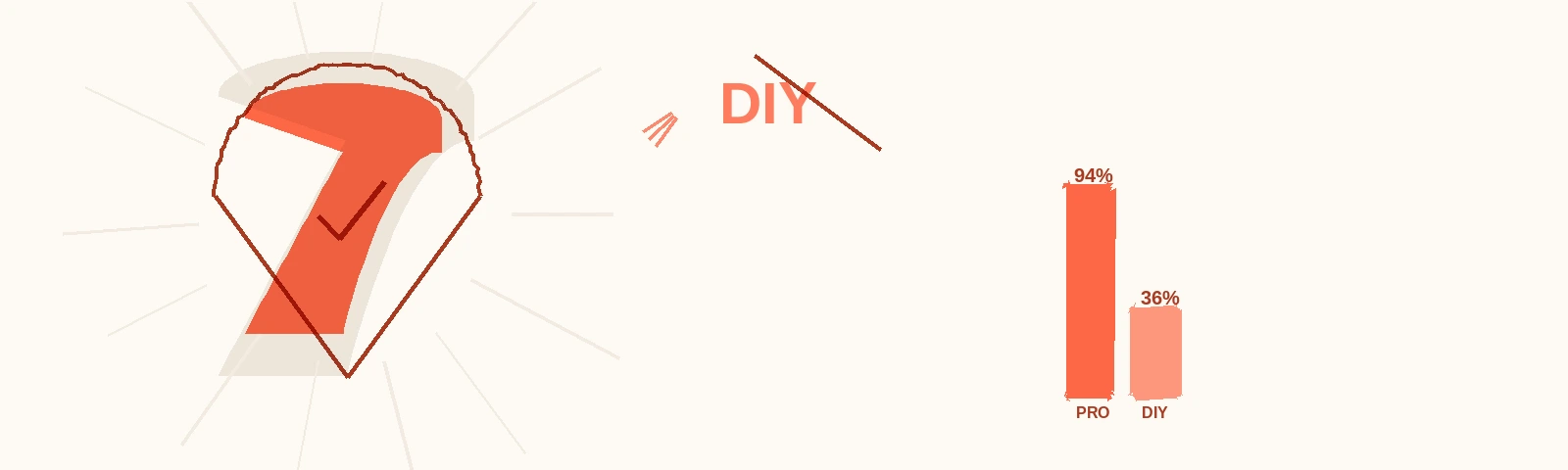
According to the National Association of Realtors, approximately 36% of homeowners who initially attempt to sell without a broker eventually list with one. The primary reasons cited are difficulty pricing correctly, limited market exposure, and the complexity of managing legal paperwork. In European markets with higher regulatory requirements, the reconversion rate is estimated to be even higher, though comprehensive pan-European data is limited. The key insight for brokers is that FSBO sellers are not lost prospects - they are future clients who need time and data to reach their own conclusion.
How soon after listing privately do FSBO sellers start considering a broker?
The critical window is 21 to 45 days after initial private listing. Research from multiple listing services shows that inquiry volume for private listings drops by 40-60% after the first three weeks, which is typically when the seller begins questioning their approach. Brokers who build valuation campaign follow-up sequences that include FSBO monitoring can identify these sellers at the exact moment they are most receptive to professional assistance - not when the listing first appears, but when the listing starts going stale.
Is the FSBO objection different in European markets compared to the United States?
The underlying psychology is identical - sellers want to avoid paying commission - but the regulatory context differs significantly. European markets generally have stricter disclosure requirements, more complex transaction processes, and in many jurisdictions mandatory involvement of notaries or legal professionals. This means the “hidden cost” argument is actually stronger in European markets: the legal exposure of selling without professional guidance is higher, and the time-to-close advantage of broker-assisted sales is more pronounced in markets with regulatory complexity.